Reasons to be Cheerful
What The Guide Says
Existing evidence shows that when times get tough, local people step up.
Reports in the aftermath of recent disasters such as Covid, Grenfell, water outages, storms and attacks demonstrate that UK communities consistently display high levels of resilience and solidarity during times of crisis.
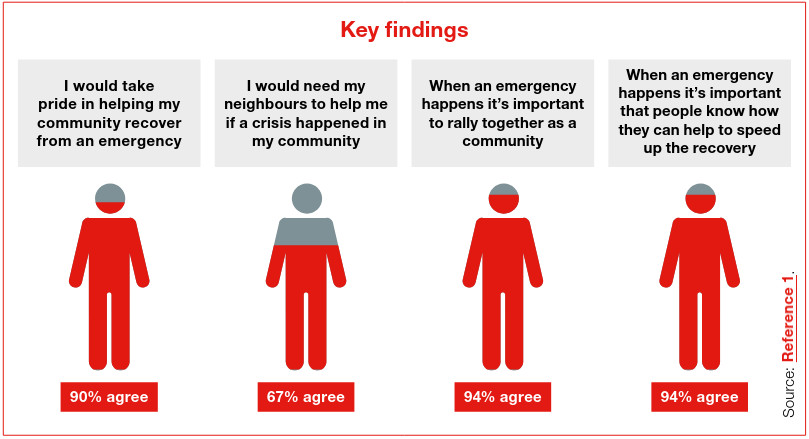
The British Red Cross has reported that almost nine in ten people (88%) said if an emergency happened in their community they would want to get involved[1][*1].
Preparedness isn't selfish, it's an act of kindness
Groups such as the British Red Cross assume major responsibilities when our security or services are threatened. They emphasise the human kindness that communities show to each other during such times, and see this kindness as key to their effective response.
However, their resources are in high demand during such moments. One of the kindest things we can do is prepare ourselves to be able to be self-reliant, so that we can free up emergency response teams to lend their aid to others.
Be part of the solution, not part of the problem
The more people that are able to take care of themselves during and immediately after a crisis, the better we can protect those who are most vulnerable.
Rationale, background and more
Predominantly self-explanatory, this page builds on the experience of bodies like the British Red Cross and others, where it's found that many people volunteer to help others in a crisis. This is contrary to the genre of alarmist films which prefer to focus on lawlessness and warlord-ism.
Literature on disaster sociology, public health, and emergency management shows that communities rarely descend into chaos or passivity during crises. Instead, research consistently documents bottom-up empowerment, informal self-organization, and strong prosocial behaviour. Examples such as "How do people support each other in emergencies? A qualitative exploration of altruistic and prosocial behaviours during the COVID-19 pandemic"[2] or "A review of informal volunteerism in emergencies and disasters: Definition, opportunities and challenges"[3] give the lie to that assumption. A direct quote from the latter is
"Research challenges the popular perception that disasters unleash chaos and disorganisation, with citizens becoming passive victims, panic-stricken, or engaging in antisocial behaviours such as looting. Rather, individuals and groups have generally been found to become more cohesive than in 'normal' times, commonly working together to overcome disaster-induced challenges"
References
- ^1 ^2 British Red Cross / Aviva 'When Crisis Hits' report
- ^ US NIH report on people supporting each other in emergencies
- ^ Article on volunteerism from the International Journal of Disaster Risk Reduction
Footnote
- ^ The British Red Cross report quotes the source for this graphic as "The British Red Cross commissioned Opinium Research to conduct a survey of 4,000 UK adults, representative of the population. Fieldwork was conducted online between March 9 and 13, 2018."