Reasons
What The Guide Says
Reasons To Prepare
An emergency of any kind is something that we would all rather not think about. None of us wants to imagine the personal impact of disruptions to our daily lives, but the reality is that this is not something that can be totally ignored. We've all seen examples in the news: no running water in parts of Kent[1] and Suffolk[*1] for up to two weeks during midwinter 2025. The sudden emptiness of supermarket shelves at the start of Covid. Increasing economic uncertainty due to war and international conflict.
The range of threats, risks and predictable crises facing the UK is growing. According to the Government's National Risk Register[2] these may come from, for instance:
- another pandemic
- rising temperatures, flooding and increasing severity of storms
- food and gas supply shortages
- war or conflict in Europe or NATO
- technological and internet failure
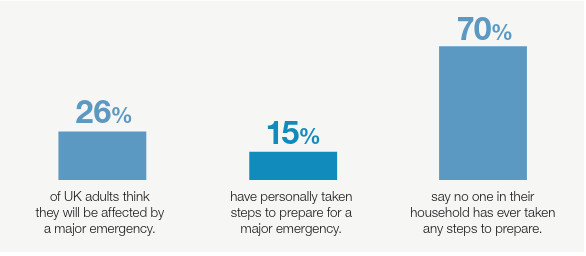
Mercifully, most of us here in the UK will get through life without being badly affected by the worst of it. There is no point dwelling on larger-scale catastrophes: we do not recommend doing this! What we can do is be prepared to handle short-term, mitigatable disasters.
Preparedness Isn't Scary: It's Empowering
It doesn't need to be doom and gloom. Emergencies are a fact of life: we start preparing for them in childhood when we learn the number '999'. Expanding our mindset to prepare for community-wide emergencies can feel incredibly powerful. In uncertain times it's a reasonable and productive coping strategy.
You can prepare in positive ways: storing some treats and things you love, a deck of cards and family boardgame, even extra birthday gifts - so that if crisis hits you aren't queueing up anywhere in the rain, but staying safe and cosy indoors, not wanting for anything urgent - maybe even having a good time with the people you love!
Rationale, background and more
Most of the above is self-explanatory and needs no further commentary. It might be worth emphasising that large-scale catastrophes are highly unlikely; some people who obsess about preparedness appear to expect all-out war or nuclear exchanges; the reality is that infrastructure failures or breakdowns in the supply of food, water or other essentials are much more likely even in the case of asymmetric conflict or terrorist action. Unsurviveable situations are, well, unsurviveable whereas there are many possible scenarios where being prepared makes a huge difference.
References
- ^ BBC report on lack of water during 2025
- ^ UK National Risk Register 2025
- ^ British Red Cross 'Ready for Anything' report
Footnote
- ^ The guide mentions water shortages in Suffolk during 2025 but for Suffolk, read Sussex.