
Light
What The Guide Says
When the power goes out, the first thing we want to reach for is a light source.
Having a light source is essential to preventing injury from trips, bumps and scratches. This is why it is so high on the priority list, and one could argue putting it ahead of water or at least equivalent in terms of necessity. It is literally a life saver.
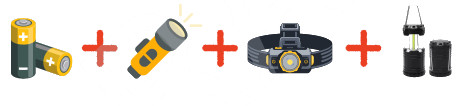
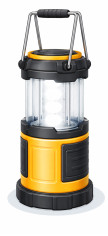 One torch is the bare minimum - ideally have a torch per person, and camping
lights to keep rooms lit. A headtorch is important to help with tasks that
become more dangerous in the dark, such as cooking or using stairs.
You can get a set of collapsible camping lights online for £15-20. Make sure they are battery powered, as these are the most reliable in a power outage.
Rationale, background and more
Most people have a good idea what they will do for a light source in case of power cuts so little here will be new. Obviously these should be tested fairly regularly, kept in known and accessible places and be easy to find and use in the dark.
Candles, for some reason, seem to have caught the popular imagination despite properly being relegated to the 19th century. They are of course a significant fire risk, something probably best avoided in a lengthy power cut when access to emergency services may be particularly difficult. The use of candles as a light source is not recommended; you can do better.
Hand torches also have a popular place in folk memory but again there are probably better options, especially head torches which are preferred by many whose work or leisure obliges them to use portable light sources as they leave your hands free and typically shine where you are looking.
LED lights in particular have transformed portable light sources in recent times with a drastically lower battery consumption and a large variety of rechargeable versions.
Apart from camping lights there are multiple sources of rechargeable lights for workplaces and trades, available from numerous suppliers to the trade and DIY markets. Suppliers such as Toolstation, Machine Mart, Screwfix, Wickes and others are typical sources.